Step in.Strike true.

Kendo is the Japanese way of the sword: full-contact fencing with bamboo shinai, armour and a fighting spirit you can hear across the dojo. Learn it in India with the federation that brought it here.

1999Kendo first promoted in India
Team IndiaFirst Indian team at the Asian Kendo Championship
All agesA lifelong martial art

剣道

The way of the sword

A modern martial art carrying the spirit of the samurai into a sport you can practise for life.

Kendo (剣道, “sword way”) descends from kenjutsu, the swordsmanship of Japan’s samurai. Today two kendoka in armour face each other with shinai, scoring by striking precise targets with speed, timing and total commitment.

It is as demanding as any sport: explosive footwork, sharp reflexes and stamina. Yet what keeps people training for decades is what happens inside — focus under pressure, respect for your opponent, and the calm that follows real effort.

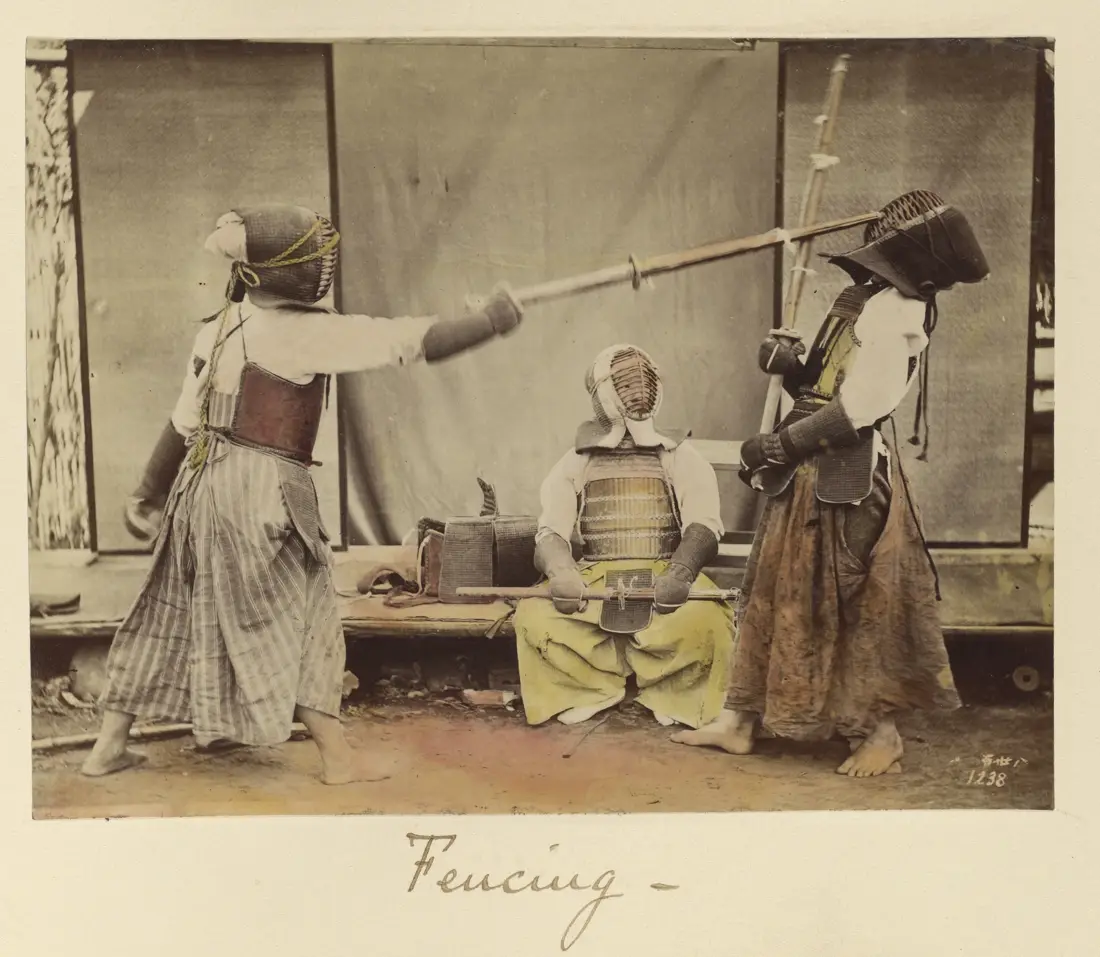
Two swordsmen in early kendo armour sparring with bamboo swords while a third watches, photographed in Japan in 1873
The armour has barely changed in 150 years.Swordsmen practising with bamboo swords and armour in Japan, photographed in 1873. The same spirit is trained in dojos today, including ours in India.

Spirit, sword and body as one

A strike only counts when your voice, your blade and your stepping foot arrive together. Half-hearted attacks score nothing.

Respect first

Every practice begins and ends with a bow. Your partner is not an enemy but the person who makes you better.

Remaining mind

Zanshin is the alertness you keep after you strike. Even when you win the point, you stay ready.

Four targets.
One clean strike.

A kendoka in armour, showing the four scoring targets 印 度
面
“Men!”

A straight cut to the top of the head. It is the first strike every beginner learns and the classic point in competition: a big, decisive attack that demands courage to step in.

Practised from your very first weeks.

What makes an ippon (a point)? Hitting the target is not enough. The strike must land with the correct part of the shinai, with a full kiai calling the target, a strong stamp of the front foot, good posture, and zanshin afterwards. Three referees judge it in an instant.

Your equipment

Modern kendo armour is modelled on the ō-yoroi of the samurai. You build up your kit step by step as your training grows.

  • Shinai

    The practice sword: four bamboo staves held together by leather fittings. Used for full-contact sparring in armour.

  • Bokutō

    A solid wooden sword of oak or another hardwood, used for basics and for kata — the formal, pre-arranged forms.

  • Men

    The helmet, with a steel grille for the face and padded flaps protecting the shoulders and throat.

  • Kote

    Padded gauntlets that protect the hands and forearms — and one of the four scoring targets.

  • Dō

    The breastplate, traditionally lacquered, protecting the chest and the sides of the body.

  • Tare

    The waist protector with flaps over the hips and groin. Its name tag, the zekken, shows your dojo and name.

  • Keikogi & hakama

    A heavy cotton jacket and wide, pleated trousers, traditionally dyed indigo. Worn under the armour.

Your first steps

  1. 礼法 · Reihō

    Etiquette and stance

    Learn to bow, hold the sword in chūdan-no-kamae and move with suri-ashi, the sliding footwork at the heart of kendo.

  2. 素振り · Suburi

    Thousands of swings

    Practice cuts that build a straight, powerful swing and the stamina to keep it sharp when you are tired.

  3. 基本 · Kihon

    Basic strikes

    With a partner, put voice, sword and body together on men, kote and dō until each strike is clean.

  4. 防具 · Bōgu

    Armour on

    When your Sensei says you are ready, you put on the armour and begin sparring — the moment every kendoka remembers.

Kyū grades mark your progress as a student. Dan grades run to 8th dan, one of the hardest exams in martial arts.

Kendo India Federation

Prof. Dr. Siddiq Mahmoodi

Pioneer of kendo in India, founder of the Kendo India Federation (Indo Kendo Renmei) and honorary citizen of Miyoshi City, Hiroshima, Japan. Every student trains under the direct supervision of Sensei.

  1. 1974

    Prof. Dr. S. M. Siddiq Mahmoodi begins his martial arts journey in judo, advancing to jujutsu and kenjutsu under Behram Mistry Sensei, and later iaidō.

  2. 1986

    The Golden Dragons Association is founded in Hyderabad to promote Japanese martial arts in India. It sponsors and supports Kendo India to this day.

  3. Dec 1999

    Kendo India Federation, a government-registered body, begins promoting kendo in India for the first time.

  4. 2003

    The first public kendo demonstration, at Shilparamam in Hyderabad with Sensei Dr. Junichi Kashiwagi, before the Consul General of Japan and the Governor during Japan Week.

  5. 2005

    India’s first-ever kendo seminar, with Sensei Hossein Karamyar and Dr. Babak Bayazi from Iran. The same year, kendo joins the Municipal Corporation of Hyderabad summer camps for the first time.

  6. 2006

    Prof. Siddiq visits the International Kendo Federation headquarters in Tokyo and is made an honorary citizen of Miyoshi City, Hiroshima.

  7. 2007

    India is invited as an official observer to the 8th ASEAN Kendo Tournament in Bangkok, and the Indian flag is displayed at an international kendo event for the first time.

  8. 2009

    Kendo India presents its first team demonstration, at the Greater Hyderabad summer camp ceremony.

  9. 2012

    At the Delhi Budo demonstration marking 60 years of Japan–India diplomatic relations, the first Indian kendo team performs alongside high-ranking masters from Japan.

  10. 2014

    The Ambassador of Japan, Takashi Yagi, honours Prof. Siddiq at the Embassy in New Delhi, presenting 7 sets of bōgu and 20 shinai donated through the International Kendo Federation.

  11. 2016

    Team India competes at the 16th Hong Kong Asian Open Kendo Championships.

  12. 2019

    Indian kendoka compete at the 17th Nakane Cup Tournament in Bangkok.

  13. A first

    India sends its first-ever team to the Asian Kendo Championship.

  14. Honoured

    Prof. Siddiq receives the Consul General’s Commendation Award from the Government of Japan.

  15. Today

    Regular keiko in Hyderabad, seminars with visiting masters from Japan and around the world, and a growing Team India.
Questions beginners ask

Do I need my own equipment to start?

No. Beginners start in comfortable clothing and learn footwork, etiquette and swings first. A shinai comes next, and armour later once your basics are solid. Sensei will guide you on what to buy and when.

Is kendo safe?

Strikes land only on armoured targets, and the shinai is designed to flex. Training builds up gradually, and contact begins only after you have learned to strike and receive correctly.

Am I too old, or not fit enough?

Kendo is famous as a lifelong art — people begin as children and keep training well into old age. Fitness comes from the practice itself. Start where you are.

Is it like the sword fighting in films?

It is faster and more honest. There is no choreography in sparring: a point is earned only with perfect timing, full spirit and a clean strike.

How long until I can spar?

It depends on how often you train. Your Sensei decides when you are ready for armour, once your footwork and strikes are safe and consistent.

Train with us

Every class is taught under the direct supervision of Sensei, from your first bow to your first bout in armour.

  1. Write to us

    Send an email with your name, age and any martial arts experience. Complete beginners are welcome.

  2. Meet Sensei

    Visit the dojo, watch a keiko and choose the training package that suits you.

  3. Start training

    Come in comfortable sportswear. Your kendo journey begins with footwork, etiquette and your first swings.

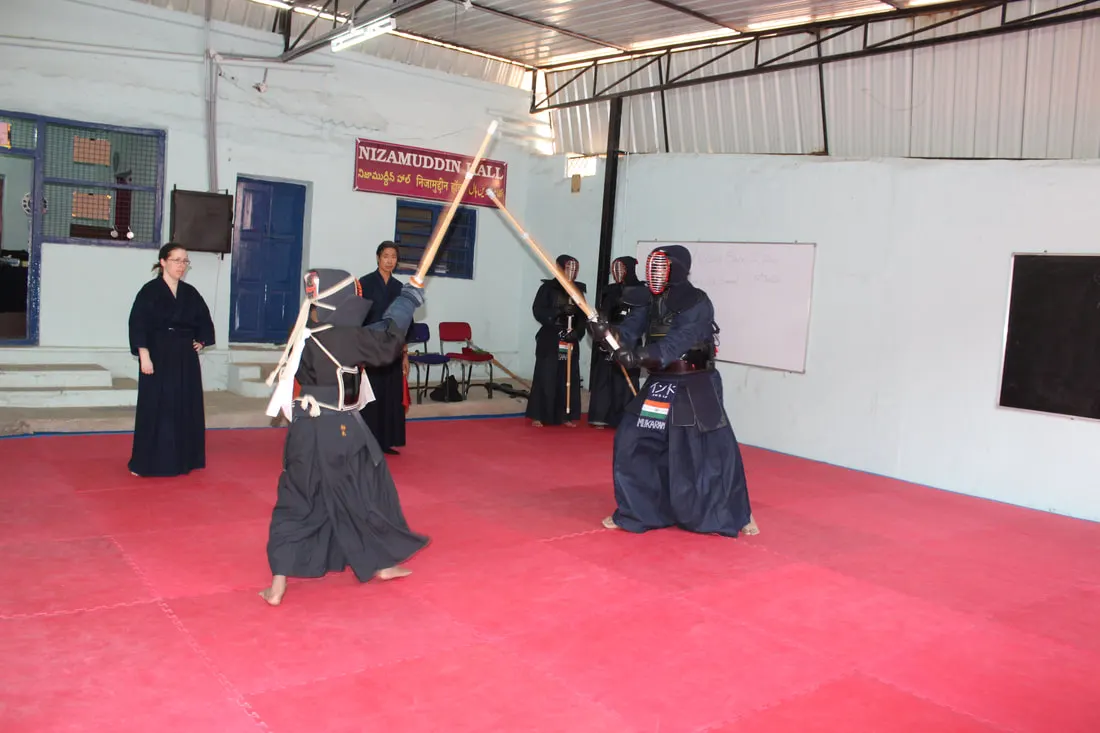
Two kendoka sparring in armour on red mats while others watch
Sparring practice. Every session follows the same rhythm of bows, drills and sparring.

Workshops & seminars

Special workshops are held subject to Sensei’s availability and are announced to students in class.

For class details, packages and upcoming workshops, write to us.

[email protected]

Your first class starts with a bow.

Come and watch a keiko, meet Sensei and feel the energy of the dojo. Everyone in the room was a beginner once.